
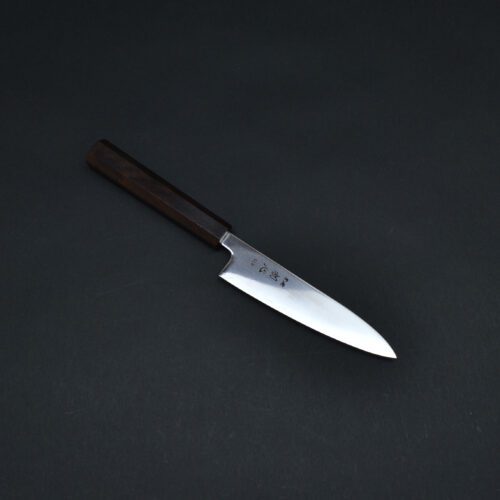
| Brand / Blacksmith | Hatsukokoro |
| Series: | Hikari |
| Knife type: | Petty 130 |
| Blade Length / Total length (mm): | 130 / 260 |
| Grind: | 50/50 |
| Finish: | Polished / Satin |
| Steel type: | SLD |
| Forging method: | San Mai |
| HRC hardness: | 61 |
| Handle type / Material / Ferrule: | Wa / Mono Ebony |
| Spine Thickness at heel / tip (mm): | 1,85 / 0,4 |
| Blade height at heel (mm): | 33 |
| Weight (gr): | 75 |
| Notes: |
-
Hatsu – Kokoro means innocent spirit. A very important wholesaler from Amagasaki city in Hyogo prefecture cooperating with some of the best craftsmen in Japan. The Hatsukokoro brand is their house brand, crafted from undisclosed but some of the most experienced blacksmiths. The Hikari Series are made of new technology SLD SEMI stainless steel that holds an edge for very long but at the same time is easy to sharpen. Polished finish with a distinct lamination line makes it look beautiful combined with a perfect fit and finish and a Mono Ebony octagonal handle. The most impressive characteristic of this series is it's extreme, laser like, grind and blade thickness as well as it's light weight! Petty is one of the most commonly used knives in the kitchen. A small, general-purpose knife used for peeling, shaping, and slicing fruits and vegetables, chopping herbs, and making garnishes that also can be used in handheld cuts.
-
Sale!Founded more than 100 years ago in 1919 by Tokie Hokiyama in Tosa – Shikoku Island – Hokiyama cutlery stands on a triangle of values: Tradition, Innovation and practicality. They preserve the original clad forging method cultivated over 800 years of Tosa cutlery history with craftsman spirit and ambitions of making further innovations for the future. While making traditional knives, they keep on searching up-to-date technologies, materials and manufacturing process, and always trying to develop more refined products aiming at further evolution. The Sakon Ginga line is made of Gingami (Silver-3) stainless steel at a hardness of HRC 61-62. Being also stainless cladded with SUS – 405 stainless steel, requires less care that the carbon steel knives and are very easy to sharpen. Features a beautiful Nashiji finish and an octagonal Rosewood handle. The Petty is one of the most commonly used knives in the kitchen. A small, general-purpose knife used for peeling, shaping, and slicing fruits and vegetables, chopping herbs, and making garnishes that also can be used in handheld cuts. The 135mm version seems to be ideal size for versatile use.
Brand / Blacksmith: Hokiyama Series: Sakon Ginga Knife type: Petty 135mm Blade Length / Total length (mm): 135 / 260 Grind: Double Bevel Finish: Nashiji Steel type: Ginsan (Silver-3) Forging method: San Mai HRC hardness: 62 Handle type / Material / Ferrule: Octagonal / Rosewood / Wood Spine Thickness at heel / tip (mm): 2 / 0,3 Blade height at heel (mm): 28 Weight (gr): 71 Notes: -
Sale!Founded more than 100 years ago in 1919 by Tokie Hokiyama in Tosa – Shikoku Island – Hokiyama cutlery stands on a triangle of values: Tradition, Innovation and practicality. They preserve the original clad forging method cultivated over 800 years of Tosa cutlery history with craftsman spirit and ambitions of making further innovations for the future. While making traditional knives, they keep on searching up-to-date technologies, materials and manufacturing process, and always trying to develop more refined products aiming at further evolution. The Tosaichi AO line is an amazing value for money series! Is made with Aogami Super steel – mayne the top carbon steel used in Japanese cuttlert and is forged at a high HRC 63 hardness. Being stainless cladded with SUS – 405 stainless steel, requires less care that the usual carbon steel knives while maintaining all the advantages of the carbon steel. Features a beautiful Migaki (Polished) finish and an octagonal Ebony handle. The Petty is one of the most commonly used knives in the kitchen. A small, general-purpose knife used for peeling, shaping, and slicing fruits and vegetables, chopping herbs, and making garnishes that also can be used in handheld cuts. The 135mm version seems to be ideal size for versatile use.
Brand / Blacksmith: Hokiyama Series: Tosaichi Ao Knife type: Petty 135 Blade Length / Total length (mm): 135/264 Grind: 50/50 Finish: Migaki (polished) Steel type: Aogami Super Forging method: San Mai HRC hardness: 63 Handle type / Material / Ferrule: Wa / ebony / Olive Spine Thickness at heel / tip (mm): 1,95 / 0,4 Blade height at heel (mm): 27,3 Weight (gr): 79 Notes: -
Sale!Founded more than 100 years ago in 1919 by Tokie Hokiyama in Tosa – Shikoku Island – Hokiyama cutlery stands on a triangle of values: Tradition, Innovation and practicality. They preserve the original clad forging method cultivated over 800 years of Tosa cutlery history with craftsman spirit and ambitions of making further innovations for the future. While making traditional knives, they keep on searching up-to-date technologies, materials and manufacturing process, and always trying to develop more refined products aiming at further evolution. The Tosaichi Bright line is made of Aogami Super steel at a high HRC 63 hardness. Being stainless cladded with SUS – 405 stainless steel, requires less care that the usual carbon steel knives while maintaining all the advantages of the carbon steel. Features a beautiful Hammered pattern and an octagonal Rosewood handle. The Petty is one of the most commonly used knives in the kitchen. A small, general-purpose knife used for peeling, shaping, and slicing fruits and vegetables, chopping herbs, and making garnishes that also can be used in handheld cuts. The 135mm version seems to be ideal size for versatile use.
Brand / Blacksmith: Hokiyama Series: Tosaichi Bright Knife type: Petty 135mm Blade Length / Total length (mm): 140 / 265 Grind: Double Bevel Finish: Hammered Steel type: Aogami Super (Stainless Clad) Forging method: San Mai HRC hardness: 63 Handle type / Material / Ferrule: Octagonal / Rosewood / Wood Spine Thickness at heel / tip (mm): 2 / 0,3 Blade height at heel (mm): 30 Weight (gr): 75 Notes:


